
Dr Me
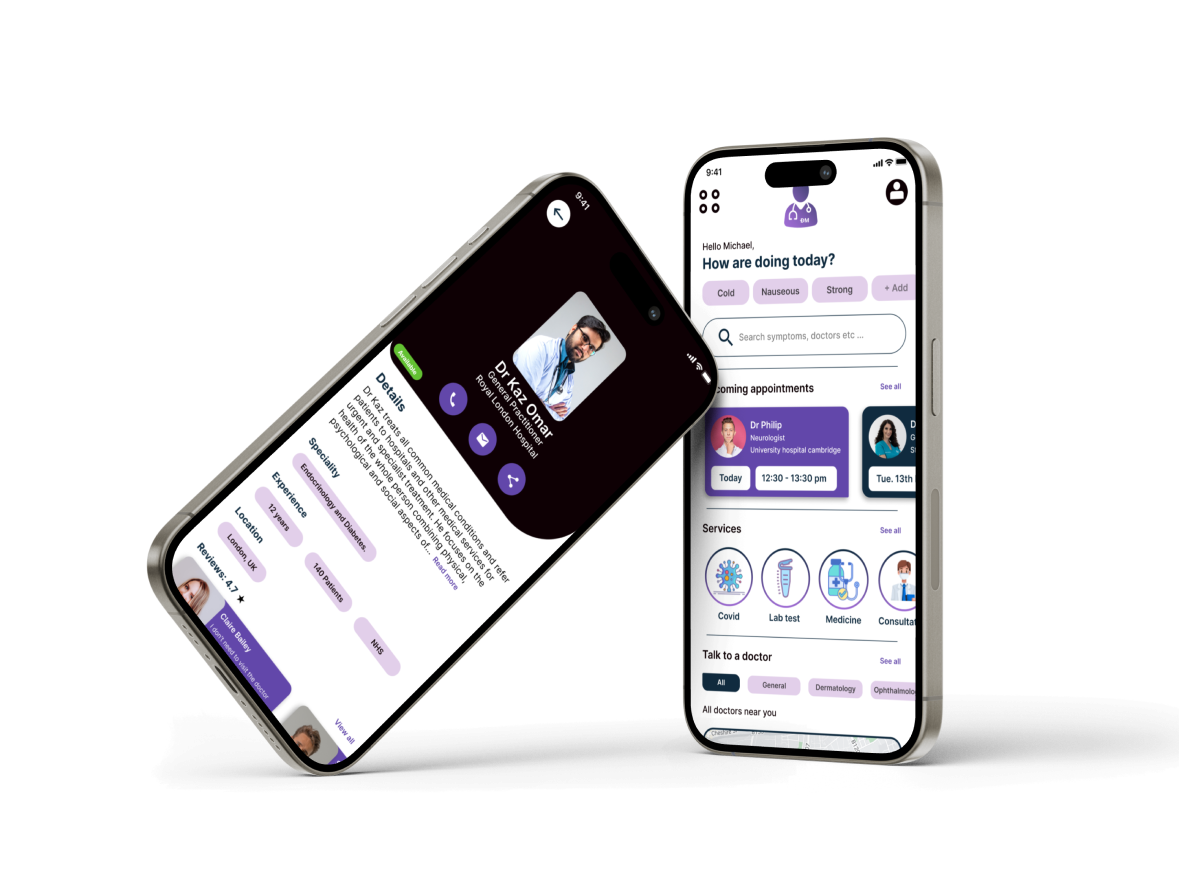
Dr Me is a digital healthcare platform designed to help patients access medical services and manage their healthcare interactions.
The project focused on simplifying the patient journey and improving accessibility to healthcare services.
Role: UX/UI Designer
Timeline: 3 months
Company: Tens of London
Tools: Figma, Miro
Impact: Created an innovative health app to revolutionise the way users access medical services
My role
Contributed to extensive UX research by conducting user interviews and surveys to gather insights on user behaviors and preferences.
Designed interaction flows that enhanced user experience and improved overall satisfaction with intuitive navigation and aesthetically pleasing layouts.
Collaborated effectively with product and development teams to ensure that user feedback was incorporated into the final products, leading to robust and user-friendly applications.
Background
The problem statement
Dr Me is an innovative health app designed to revolutionise the way you access medical services. With just a few taps, you can effortlessly book appointments, consult renowned specialists, and access personalised care plans tailored to your needs.
Patients often experience difficulty navigating healthcare systems due to fragmented services and unclear processes. This leads to delays in accessing care and confusion around available services.
Challenges
Limited timeframe required efficient planning and prioritisation of research activities.
Incentives were offered to boost survey and interview participation rates.
Success metrics
These are the success metrics and criteria set for the project to make sure all ares were considered
User goals
Business goals
Constraints
Increase patient engagement with digital healthcare services
Patient access to gp services and advice without long wait times
Connecting the right heart;thcare professional to the users in need
Easily locate healthcare services
Simplify appointment booking
Secure record keeping of health records
Ability to request prescriptions
Access to private and public healthcare professionals
Healthcare compliance requirements
Multiple service providers integrated into the system
Research & discovery
The online surveys and unmoderated testing discovered that users wanted a user-centric platform, featuring clean and minimalist UI design. Participants navigated visually engaging wireframes with intuitive elements. Valuable insights on user preferences and pain points were gathered to shape a personalised user experience.
Research identified several key issues:
Confusing navigation structures
Difficulty discovering available services
Complex appointment booking processes
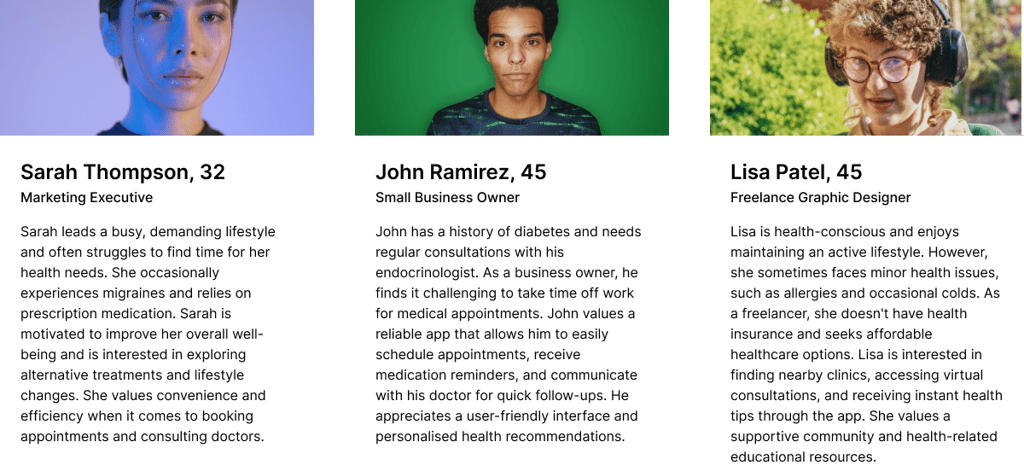
User personas
Concept exploration
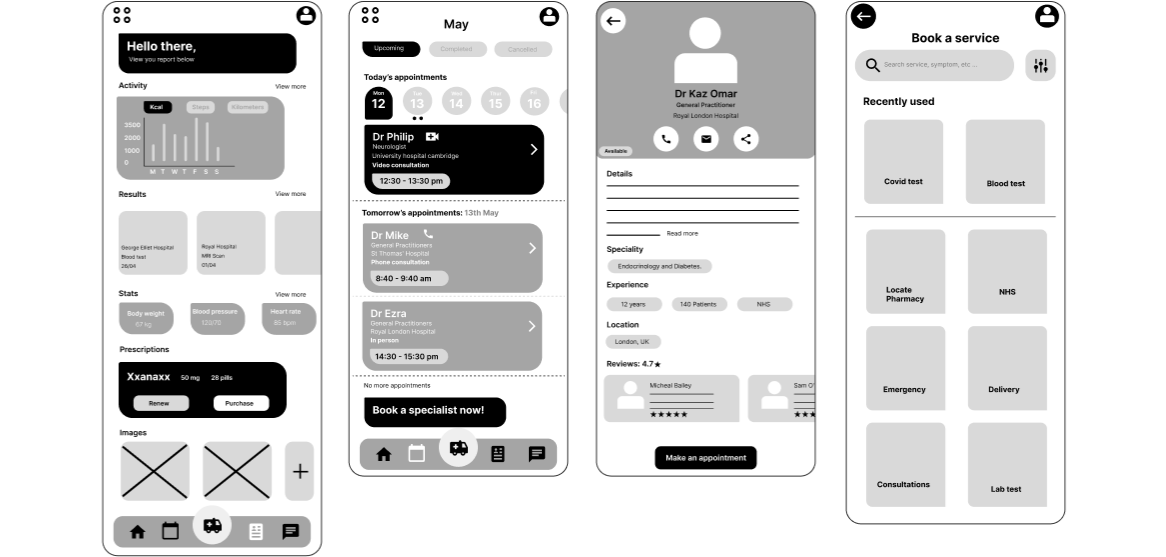
Initial design concepts focused on simplifying healthcare interactions while maintaining access to critical information, ensuring that patients can easily navigate various services, access necessary resources, and communicate effectively with healthcare providers. This approach is essential to enhance user experience and streamline processes, making healthcare more efficient and user-friendly for everyone involved.
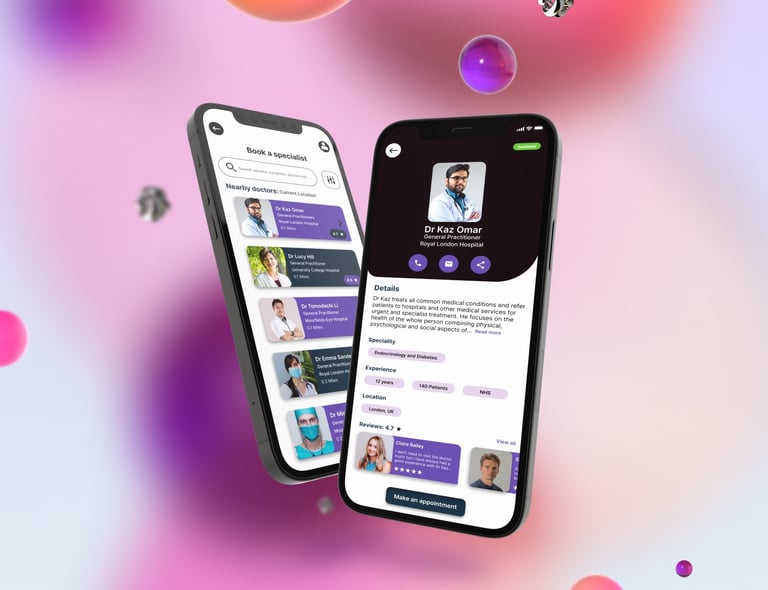
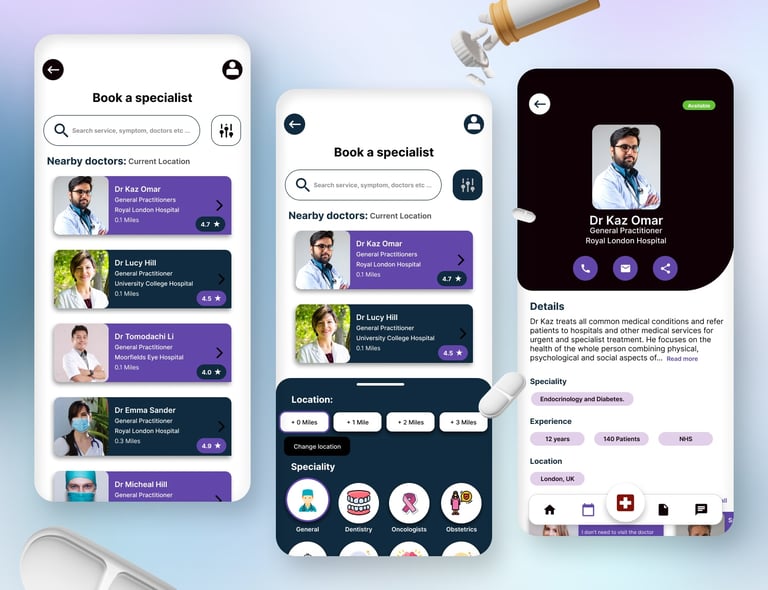
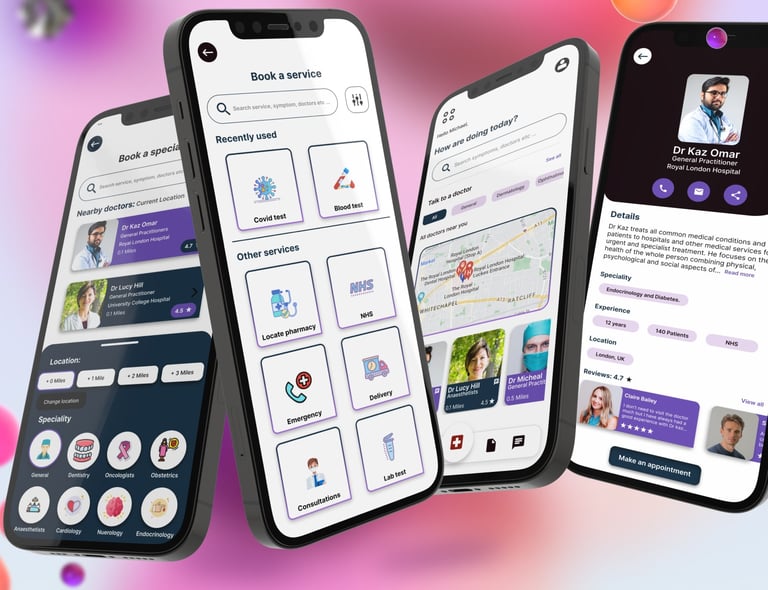
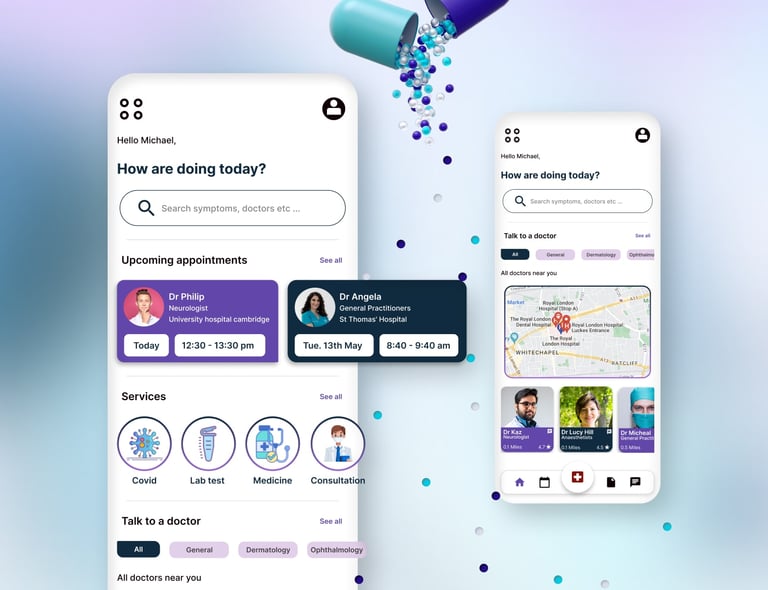
Final design
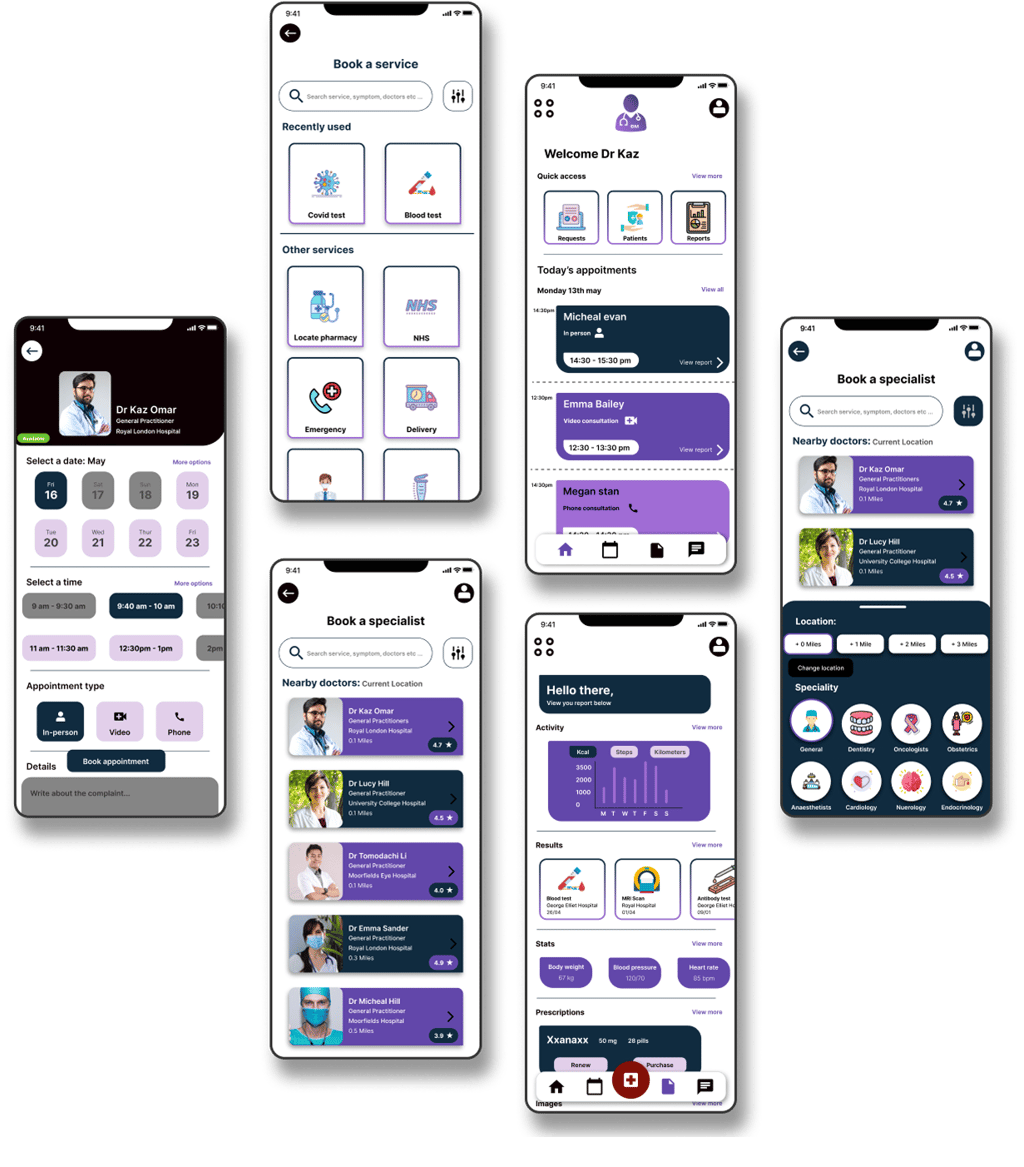
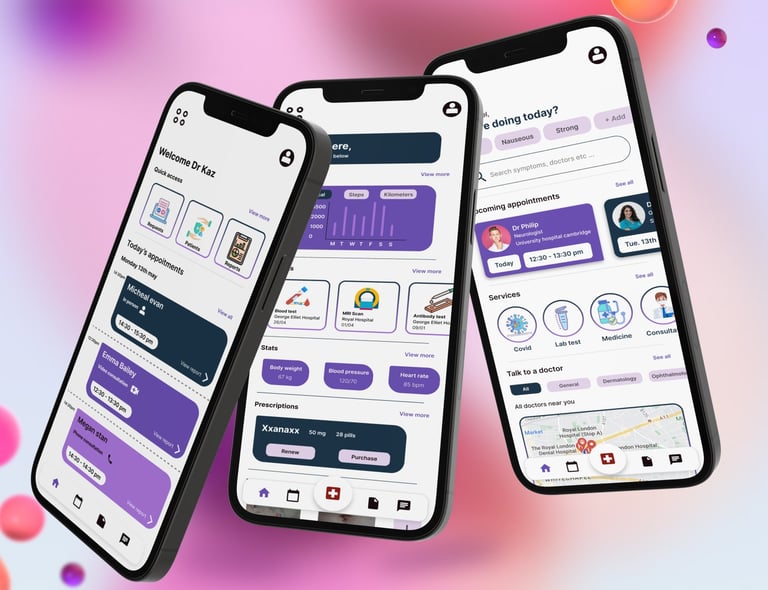
The final design introduced:
clearer navigation structures
streamlined appointment booking flows
improved service discovery
Results & impact
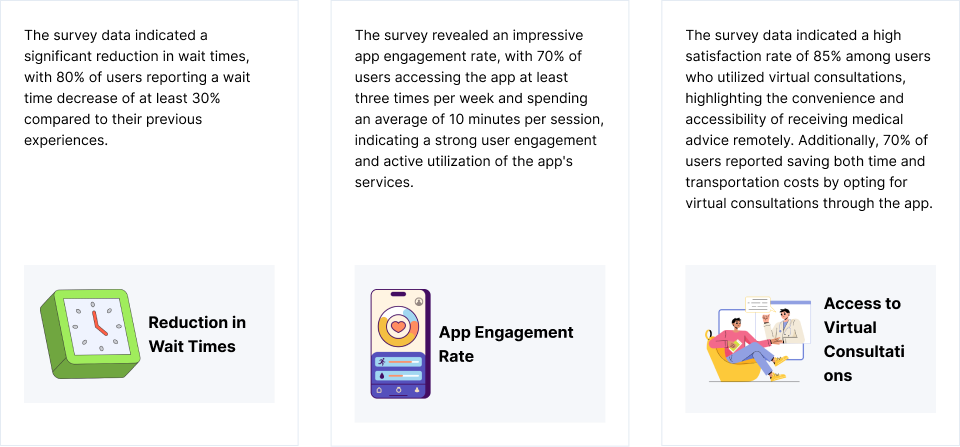
The improved platform significantly reduced friction when accessing healthcare services and greatly enhanced the patient experience by providing streamlined processes, real-time updates, and comprehensive support, ensuring that patients feel more informed and engaged throughout their healthcare journey.
My learnings
Healthcare products require strong accessibility and clarity to ensure that all users can benefit from them effectively. Future improvements could include personalised healthcare dashboards that are tailored to individual needs, allowing for a more comprehensive view of one's health. This would enable patients to monitor their conditions in real-time and make informed decisions about their healthcare, fostering a more proactive approach to wellness. Additionally, integrating user-friendly interfaces and educational resources within these dashboards may further enhance usability and promote better health literacy among users.